

How to Find Your Breast Pump Flange Size: A Complete Guide
Posted On: January 8, 2026
At Binson's Medical Equipment & Supplies, we have been dedicated to providing personalized service and high-quality products since 1953. As we expand our services nationwide, our commitment remains the same: ensuring every pregnant parent and birthing parent has the tools and knowledge they need for a successful health journey.
For many breastfeeding individuals, pumping is a vital part of daily life. However, if your equipment doesn't fit correctly, it can lead to discomfort or decreased milk supply. This guide will walk you through the essential steps of measuring your breast pump flange size to ensure maximum comfort and efficiency.
Why Flange Sizing is Critical for Pumping Success
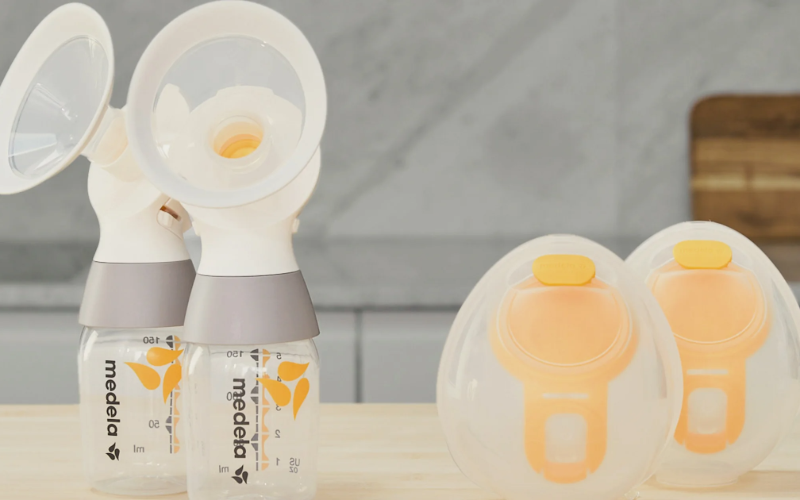
A breast pump flange (also known as a breast shield) is the funnel-shaped piece that fits directly over your nipple. Getting this size right is not just about comfort; it is a fundamental component of effective pumping.
- Optimized Milk Flow: A correct fit helps ensure that milk ducts are not compressed, allowing for better drainage.
- Pain Prevention: Pumping should never be painful. The right size prevents the nipple from rubbing against the tunnel sides, which can cause redness or skin breakdown.
- Efficient Removal: When the nipple can move freely in the tunnel, the pump can more effectively mimic a baby’s natural suckling.
A Step-By-Step Guide to Measuring Your Nipple
To find your ideal flange size, you must first determine your nipple diameter. We recommend measuring after birth, as nipple size can change during the postpartum period.
1. Measure the Diameter
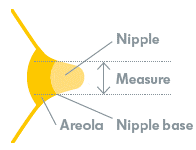
Using a ruler or measuring tape, measure the diameter of your nipple at the base (across the middle) in millimeters (mm). Do not include the areola (the darker skin surrounding the nipple) in your measurement.
2. Apply the Sizing Formula
Once you have your measurement, use the following formula to determine your recommended Medela breast shield size:
$$Shield Size = Nipple (mm) + 4 mm$$
Example: If your nipple base measures 16 mm, your recommended size is 21 mm.
3. Quick Reference Sizing Table
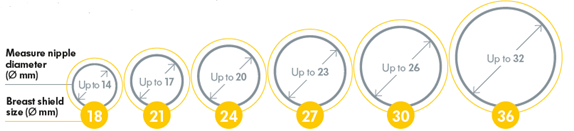
| Nipple Diameter (mm) | Recommended Flange Size (mm) |
|---|---|
| Up to 14 mm | 18 mm |
| Up to 17 mm | 21 mm |
| Up to 20 mm | 24 mm |
| Up to 23 mm | 27 mm |
| Up to 26 mm | 30 mm |
| Up to 32 mm | 36 mm |
How to Test Your Fit While Pumping
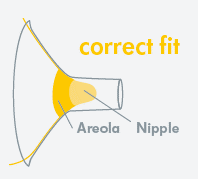
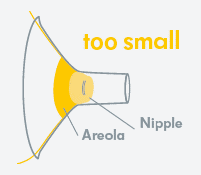
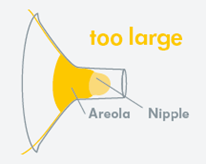
The measurement is a starting point, but you should always reevaluate the fit after a few minutes of active pumping.
Frequently Asked Questions (FAQ)
| Common Question | Expert Advice |
|---|---|
| Can my size change over time? | Yes. Your breast shield size can change over the duration of your pumping experience or even during a single session as vacuum pressure is applied. |
| Do I need the same size for both breasts? | Not necessarily. You may find that you need a different size for each breast to achieve maximum comfort and output. |
| What should I do if I am still experiencing pain? | If you have adjusted your size and still feel discomfort, or if you feel unexpressed milk remaining after a session, we recommend consulting a lactation consultant or breastfeeding specialist. |
Downloadable Resources
Finding Your Medela Breast Shield Size
A step-by-step guide for measuring and choosing the correct breast shield size for maximum comfort and efficiency.
Trust Binson's for Your Maternity Needs
We offer a wide variety of maternity supplies and breast pumps across Michigan, Indiana, and Florida, as well as through our nationwide online ordering.



0 comments