

Advancements in Prosthetic Leg Technology Today | Binson's O&P
Posted On: August 7, 2026
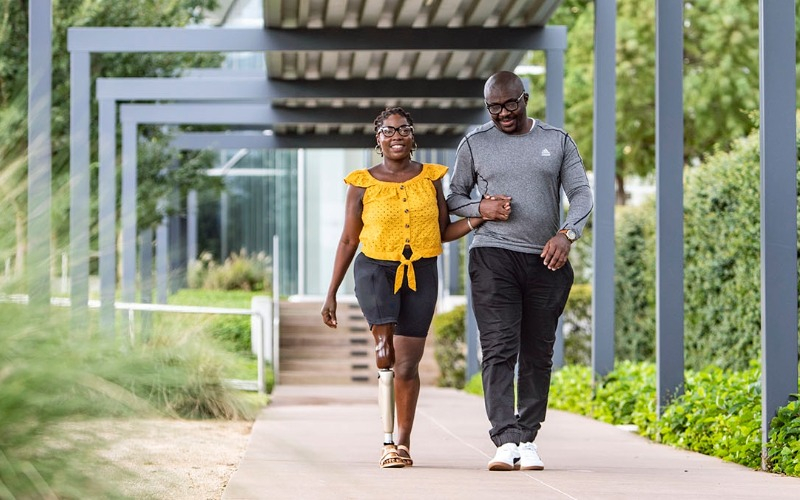
Advancements in Prosthetic Leg Technology Today: Restoring Mobility and Confidence
Lower limb prosthetics have evolved far beyond basic mechanical support. Today’s prosthetic legs combine advanced materials, embedded micro-sensors, and precision alignment tools to help individuals with limb loss experience a more natural, efficient, and comfortable gait.
Whether your goal is daily walking stability, returning to running, or finding a lightweight prosthesis tailored to your lifestyle, recent advancements in lower limb technology are raising expectations for comfort, function, and independence.
How Modern Lower Limb Prosthetics Work
A lower limb prosthesis replaces missing anatomical function by safely transferring structural forces from your body into the device. Modern engineering focuses on three core principles: control, comfort, and energy return.
A standard lower limb prosthetic system typically includes:
- Socket & Suspension Interface: The custom-crafted connection between your residual limb and the prosthesis.
- Pylon: The structural frame or "shank" segment that provides vertical support.
- Knee Joint: Mechanical or microprocessor-controlled systems (for individuals with above-knee limb loss).
- Foot and Ankle System: Passive, energy-storing, or powered components that adjust to terrain.
- Integrated Microelectronics: Sensors and software that enable real-time adaptability.
These innovations expand options for prosthesis users across all activity levels—from foundational mechanical designs to advanced bionic systems.
Microprocessor Knees: Real-Time Adaptability for Greater Confidence
For individuals with transfemoral (above-knee) limb loss, the microprocessor knee (MPK) represents one of the most transformative advances in modern orthotics and prosthetics. Integrated sensors monitor movement hundreds of times per second, automatically adjusting hydraulic or pneumatic resistance to match your walking speed and terrain.
Key Benefits of Microprocessor Knees:
- Enhanced Stumble Recovery: Real-time resistance adjustments help prevent falls on ramps, stairs, and uneven ground.
- Reduced Mental Fatigue: Automatic stance control allows you to navigate crowded spaces without constantly concentrating on every step.
- Smooth Gait Transitions: Seamlessly adapts when transitioning from slow pacing to faster strides.
If you are exploring types of lower limb prosthetics, discussing microprocessor knees with a licensed prosthetist is an excellent place to start.
Foot and Ankle Innovations: Carbon Fiber and Powered Options
Foot and ankle technology plays a critical role in shock absorption and forward propulsion, particularly for individuals using transtibial (below-knee) prostheses.
Carbon Fiber Feet: Lightweight, Springy, and Efficient
Many modern prosthetic feet utilize high-strength carbon fiber leaf springs or "blades." As weight is applied during heel strike, the carbon fiber stores energy and releases it at toe-off.
- High Energy Return: Provides natural push-off momentum with less exertion.
- Reduced Strain: Helps protect your sound limb and joints from excessive impact.
- Multi-Axial Flexibility: Allows the foot to conform to uneven surfaces like gravel or grass.
Powered Ankles vs. Passive Feet
While passive carbon fiber feet store and release energy, powered ankle-foot systems utilize motorized propulsion to actively push off with each step.
| Feature | Passive Carbon Fiber Foot | Powered Ankle-Foot System |
|---|---|---|
| Propulsion | Stores & releases body weight energy | Motor-driven active push-off |
| Best For | General mobility, sports, low maintenance | Uphill walking, stairs, reducing gait fatigue |
| Considerations | Lightweight, highly durable | Requires battery charging & regular maintenance |
Custom Socket Breakthroughs: Prioritizing Fit and Comfort
Components like high-tech knees and carbon fiber feet perform best when paired with an ideal socket fit. Discomfort, pressure points, and skin irritation can significantly hinder mobility. Today’s prosthetic clinics focus heavily on custom socket fit and pain relief solutions.
Modern socket technologies include:
- Elevated Vacuum Suspension: Uses suction to minimize movement ("pistoning") inside the socket, improving limb health and spatial awareness.
- Advanced Gel Liners: Formulated to reduce friction, manage moisture, and protect sensitive skin.
- Digital CAD/CAM Imaging: Uses 3D digital scanning for precise shape capture and custom adjustments.
- Activity-Specific Sockets: Tailored designs engineered for running, swimming, or long workdays.
Osseointegration: An Alternative to Traditional Sockets
For individuals who experience severe socket intolerance or anatomical challenges, osseointegration offers an alternative approach. This surgical procedure anchors a metallic implant directly into the bone, eliminating the need for a traditional socket.
Important Considerations for Osseointegration:
- Benefits: Eliminates socket rubbing, enhances weight distribution, and improves sensory feedback through the bone.
- Risks & Maintenance: Requires strict hygiene at the skin-implant interface to prevent infection, along with a longer rehabilitation timeline.
A comprehensive consultation with a clinical team is essential to determine if osseointegration aligns with your health and mobility goals.
Advanced Control Systems: Myoelectric Inputs and TMR Surgery
Emerging neurological and surgical techniques are making lower-limb control more intuitive and responsive:
- Myoelectric Controls: Utilizes surface sensors to detect electrical muscle signals in the residual limb, translating those signals into movement in powered ankle or knee joints.
- Targeted Muscle Reinnervation (TMR): A surgical procedure that reroutes severed nerves to adjacent muscle groups. TMR can significantly reduce phantom limb pain and nerve pain (neuromas) while creating clearer muscle signals for advanced prosthetic control.
3D Printing and Personalization
Additive manufacturing (3D printing) is revolutionizing how prosthetics are designed and customized:
- Rapid Prototyping: Allows prosthetists to create and modify diagnostic test sockets quickly.
- Tailored Aesthetics: Custom fairings and covers can match your anatomical contours or reflect your personal style.
- Specialized Designs: Enables custom attachments for hobbies, cycling, or athletic activities.
How to Choose the Right Lower Limb Prosthesis
Choosing a prosthesis is a collaborative journey between you, your physician, and your prosthetist. Here is a step-by-step checklist to guide your decisions:
- Identify Your Daily Goals: Consider your routine. Do you need a reliable prosthesis for daily household activities, demanding occupational work, or recreational sports?
- Prioritize Socket Comfort: Ensure your clinical team focuses on suspension, liner selection, and custom alignment before finalizing high-end components.
- Understand Your Insurance Coverage: Coverage for microprocessor knees, powered feet, and specialized sport prostheses varies by health plan. Work with a provider who handles insurance verification and documentation.
- Commit to Physical Therapy: Gait training, core strengthening, and balance exercises with a physical therapist are vital steps in adapting to your new prosthesis.
Routine Maintenance & Care Guidelines
To keep your prosthetic technology performing reliably, follow these foundational maintenance practices:
- Perform Daily Skin Checks: Inspect your residual limb daily for redness, pressure points, or skin changes.
- Clean Liners & Socks: Wash gel liners daily with mild, fragrance-free soap to prevent bacterial buildup.
- Inspect Hardware Regularly: Check for loose fasteners, unusual noises, or wear on foot shells.
- Schedule Annual Inspections: Visit your prosthetist regularly for alignment checks, routine adjustments, and software updates on electronic components.
Take the Next Step with Binson’s Orthotics & Prosthetics Team
At Binson's Medical Equipment & Supplies, we believe that every individual deserves compassionate care, personalized attention, and access to the latest orthotic and prosthetic technologies. Serving patients with dedication and expertise since 1953, our certified prosthetists work closely with you and your healthcare team to design a custom prosthesis tailored to your life.
Whether you are evaluating your first prosthesis, seeking a more comfortable socket fit, or looking to upgrade to advanced microprocessor technology, we are here to support you every step of the way.
Ready to Elevate Your Mobility?
Take control of your mobility journey today with a team that puts your goals first.



0 comments