

Continuous Glucose Monitor (CGM) Guide: How CGMs Work & Benefits | Binson's
Posted On: July 24, 2026
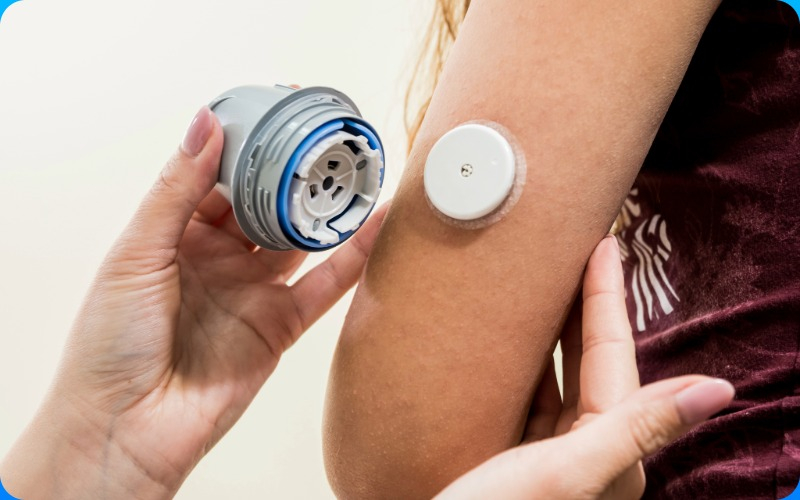
Starting Out with a Continuous Glucose Monitor (CGM): A Complete Guide
Navigating diabetes management can feel overwhelming. The wide range of medical devices and supplies can seem daunting—especially for individuals newly diagnosed or those supporting a loved one.
One tool that has transformed diabetes care is the Continuous Glucose Monitor (CGM). A CGM offers real-time glucose readings, trend indicators, and customizable alerts, allowing you to monitor your health with confidence and independence.
Whether you are an older adult looking to maintain daily independence, a parent managing a child’s health, or a caregiver supporting a family member, this guide provides clear, straightforward information to help you make informed choices.
What is a Continuous Glucose Monitor (CGM)?
A Continuous Glucose Monitor (CGM) is a compact medical device that tracks your glucose levels continuously throughout the day and night. Unlike traditional blood glucose meters (BGMs) that require multiple fingersticks daily for a single snapshot in time, a CGM provides dynamic, ongoing readings.
Traditional Fingerstick Test
Single Snapshot in Time
Continuous Glucose Monitor
24/7 Real-Time Data & Trend Direction
How a CGM Works
The Sensor
A tiny, flexible sensor wire is inserted under your skin (usually on the upper arm or abdomen) using an automatic applicator. It measures glucose levels in interstitial fluid (the fluid between your cells).
The Transmitter
A small transmitter sits on top of the sensor and wirelessly sends reading data. (Note: Modern CGMs often integrate the sensor and transmitter into a single disposable patch).
The Display Device
Glucose data is transmitted directly to a dedicated receiver, a compatible smartphone app, or a smartwatch.
Key Benefits of Using a CGM
Incorporating a CGM into your daily routine offers distinct operational and health advantages:
- Real-Time Glucose Tracking: View dynamic readings every 1 to 5 minutes to see how food, physical activity, medication, and stress affect your body in real time.
- Trend Direction & Speed: CGMs display directional arrows showing whether your glucose levels are steady, rising, or falling rapidly.
- Customizable High & Low Alarms: Built-in alerts warn you before you experience severe hypoglycemia (low blood sugar) or hyperglycemia (high blood sugar).
- Fewer Fingerstick Tests: Most modern CGMs are factory-calibrated and do not require routine fingerstick blood samples for treatment decisions.
- Improved A1C & Time-in-Range: Continuous tracking helps individuals increase their "Time-in-Range," contributing to lower A1C levels over time.
Popular CGM Systems Compared
Selecting the right device depends on your lifestyle, insurance coverage, and personal needs. Below is a direct comparison of top systems available through Binson's Medical Equipment & Supplies:
| Feature | Dexcom G7 | FreeStyle Libre 3 | FreeStyle Libre 2 |
|---|---|---|---|
| Approved Ages | Ages 2+ & Pregnancy | Ages 4+ & Pregnancy | Ages 4+ & Pregnancy |
| Wear Duration | Up to 10 days | Up to 14 days | Up to 14 days |
| Sensor Warm-Up | 30 minutes | 1 hour | 1 hour |
| Calibration Required? | No routine fingersticks | No routine fingersticks | No routine fingersticks |
| Alarms for High/Low | Yes | Yes | Yes |
| Display Options | Smartphone, Receiver, Smartwatch | Smartphone, Dedicated Reader | Smartphone, Dedicated Reader |
Setting Up Your CGM: Step-by-Step
While every device includes specific manufacturer guidelines, the general setup process is simple:
- Prepare the Site: Clean an approved insertion area (typically the back of the upper arm or abdomen) with an alcohol swab and let it dry completely.
- Apply the Sensor: Place the automatic applicator against your skin and press the insertion button to deploy the sensor under the skin.
- Pair the Device: Open your CGM app or power on your receiver to scan or pair the new sensor via Bluetooth.
- Wait for Warm-Up: Allow the required warm-up period (30 to 60 minutes depending on the model) before viewing your initial readings.
Understanding Insurance & CGM Coverage
Many private health insurance plans, Medicare, and state Medicaid programs provide coverage for Continuous Glucose Monitors when specific clinical criteria are met.
How to Get Started with Binson's
Navigating insurance requirements does not have to be complicated. At Binson’s Medical Equipment & Supplies, our dedicated team handles the process for you:
Prescription Retrieval
We work directly with your healthcare provider to gather the required medical documentation.
Insurance Verification
We verify your benefits to maximize coverage and minimize out-of-pocket expenses.
Discreet Home Delivery
Supplies are shipped directly to your home with automatic monthly reordering options.
Frequently Asked Questions (FAQs)
Is applying a CGM sensor painful?
Most users report little to no discomfort during application. Modern automatic applicators insert a tiny, flexible filament beneath the skin quickly and virtually painlessly.
Can I wear a CGM while swimming or showering?
Yes. Most modern sensors—including the Dexcom G7 and FreeStyle Libre line—are water-resistant and designed to be worn while showering, swimming, or exercising.
How do I switch from fingerstick testing to a CGM?
Consult your healthcare provider to discuss whether a CGM fits your care plan. Once prescribed, Binson's can assist you with enrolling in our home delivery service.
Take Charge of Your Diabetes Care with Binson's
Choosing a Continuous Glucose Monitor is a powerful step toward greater peace of mind and health management. As a trusted provider since 1953, Binson's Medical Equipment & Supplies is here to support you every step of the way with expert service and hassle-free supply reordering.
Need assistance? Call our diabetes care team directly at (888) 246-7667



0 comments